How to Choose Reliable Suppliers for Bulk Brake and Clutch Parts?
December 12, 2024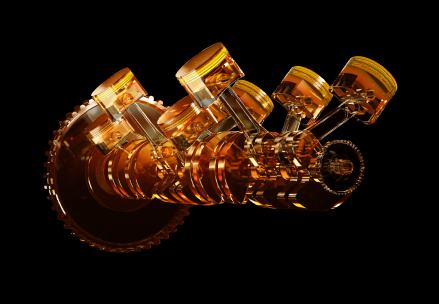
The engine of a car is to the vehicle as the heart is to the body, meaning it cannot work on its own; everything must be running in order for things to continue moving. For an auto part supplier, having the correct engine part in stock is important for the business as well as satisfying customers (and their vehicles). Let us look at the key engine components every supplier should have in his portfolio while making this topic as enjoyable as a road trip with the best music playlist.
1. Engine Blocks: The Foundation of It All
How would you attempt to bake a cake without even having the basic equipment, a pan? That is what an engine would feel like if there was no engine block. The engine block is the metal that hosts all the vital parts of the engine and which solidly connects them. It’s the one thing that happens in combustion all the time (talk about explosives to make your car zoom).
Why Stock It?
Engine blocks are available in a number of different sizes and are not uniform – whether inline, V-shaped, or flat. If someone needs to replace theirs, you’d better have it, or you’ll send them searching faster than a car runs out of gas during a road trip.
2. Cylinder Heads: The Brain of the Engine
If the engine block is the body, then the cylinder head is the brain. It consists of the intake and exhaust valves, spark plugs, and probably the fuel injectors. This Playstation plays a major role in regulation of the air fuel mixture that is needed for the combustion process.
Pro Tip for Suppliers:
Ensure that you have different cylinder heads for the many types of vehicles in existence for future use. Whether it is a sporty car convertible or a rugged truck, every motor wants its particular ‘head’.
3. Pistons: The Muscle of the Engine
You should presume pistons as the barreled muscle in the body of your engine, which moves up and down to develop energy from fuel. Without them the engine is just an ornamental piece of metallic work.
Fun Fact:
Most of the pistons move up and down in the cylinder at rather high speed. : If they had step counters, they’d record strides every time you drove to the store.
Why You Need Them:
There is a point when the pistons wear through and the engine transforms into a machine that consumes extra oil. It’s always good to have a spare piston or two and some piston rings as these little fellows are responsible for sealing the combustion chamber.
4. Crankshafts: This is the Twist and Shout of the Engine
Crankshaft, which is the one that takes the reciprocating motion of the pistons. And then, it turns the pistons into the rotational movement that spins the wheels. That is like a DJ managing the engine beat (or wheels for the situation).
Crankshafts are also strong and very rigid but this does not give them immunity to failure. Every crankshaft repair can collide with different difficulties (not to mention a literal wrench) so it is wise to have substitution parts.
5. Camshafts: Timing Is Everything
The camshaft is the one that controls the valves and when they speak or in other words when they open or close. If it is off just a little, the engine performance will sound just like that night they got up to sing and everything is not quite right.
Why It’s Essential:
Camshafts are accurate parts and when they wear off, the performance of an engine is affected. It may seem ridiculous, but it’s good to keep camshafts and timing belts in stock to save your customer from dramatic episodes with the engine.
6. Oil Pumps: The Lifeline of Lubrication
Without oil, as you well know, your engine is as good as a marathon runner who has not had any water; it will overheat and seize at the slightest provocation. The oil pump makes certain that every other part in the engine that requires lubrication gets lubricated appropriately.
Fun Analogy:
If engines were rock bands, oil pumps would be the camera crew ensuring that everything is exactly the way it should be on the big night!
Stock Alert:
When supplying cars make sure you have oil pumps for the most popular car makers and models. Little do people know how often these unsung heroes actually need replacing?
7. Gaskets and Seals: The Silent Protectors
They may not sound as jazzy as crankshaft or piston but gaskets and seals are a big plus when it comes to a leak-tight engine. Consider them as unseen actors when it comes to engine maintenance.
Why They Matter:
A damaged gasket often results in complete failure of the engine of the car or vehicle in question. Always stock up on different gaskets and seals as no one feels pleasant to work with an engine that spills like a sieve.
8. Spark Plugs: The Firestarters
Spark plugs are small devices and yet they are very powerful. They make the connection via which the energy is introduced to the air-fuel mixture within the engine. Without them, your car is just a sculpture you proudly display in your compound.
Tip for Suppliers:
Spark plugs are one of the simplest solutions to many engine related issues. Go for the bulk packaging because they’re the kind of thing that people have to restock often enough.
9. Fuel Injectors: The Precision Artists
Fuel injectors regulate the amount of fuel that is pumped into the combustion chamber as droplets. Too much or too little fuel and the engine floods or starves — the two scenarios are not desirable.
Why Keep Them Around?
Experienced car owners know that clogged fuel injectors harm fuel efficiency and other aspects of car efficiency. Ensure you have a stock of all these to suit the different types of cars available.
10. Belts and Chains: The Connectors
It is timing belts and chains that act as a driving gear, in order to keep the reciprocating parts of the engine in harmony with each other. Without them it’s crazy – and not in the rock and roll way.
Stock Up On These:
Belts and chains are seemingly mundane parts, but without them, an engine runs slightly roughly, to put it mildly. It’s always better to have spare ones on hand because when they are wrong, they are very wrong.
Conclusion: Be the Auto Parts Hero
While working for an auto parts supplier your role is not limited to selling car components, but also to ensure you are making clients, their vehicles, and everybody else on the road happy. Carrying out these items makes you the one stop hero for every mechanic and car DIY enthusiast in town.
So, fill those shelves, embrace your inner engine nerd, and remember: every part you stock could be the difference between a pleasant day on the road and a breakdown’s calamity. Stay stocked, stay awesome!